Thursday, September 4, 2008

Mentorship, Support and Accountability Part 2

Mentorship, Support, Accountability - Part 2
The Hopeless Doctor
by John M Berardi


Today's message is an important one for anyone who's ever gone to see a doctor in their lives. Uh, that's right, this means you.

A Little Background

We recently brought on 3 new members of the Precision Nutrition team. Interestingly, one of the 3 has epilepsy.

Having no experience with epilepsy, but having a deep curiousity, I've asked this new team member a ton of questions. Further, I've done a lot of independent study.

I wanted to know what epilepsy is, how it impacts people's lives, and which treatments are available for those living with epilepsy.

Interestingly, during my research, I discovered that there's actually a dietary treatment for epilepsy!

Indeed, the research is now showing that, in adults, a ketogenic (very low carb diet) can reduce the incidence of seizures in epileptics by about 80-90%. This is huge...it means that if you normally had 10 seizures per day, you'd have just 1 or 2.

If you know anyone living with epilepsy, ask them what that would mean to
their lives.

They Kept This From You?
Of course, I assumed our new team member was either following this approach or had tried it in the past.

When I inquired, the answer shocked me. Not only hadn't she tried a ketogenic diet, her doctors had never even mentioned the diet to her!

Instead, they decided to "manage" her epilepsy with 1 highly invasive brain surgery and a never-ending stream of prescription meds.

Highly pissed, we called up her doc and did a little 3-way conference call.
"Thanks, Dr. Berardi for your concern. However, the ketogenic diet is much too difficult for adults to follow. So rather than wasting time with this, I recommend another surgery."
Highly pissed barely describes my response.

This doc was actually recommending more meds AND another surgery - yet wouldn't even consider giving her a month or two to try the dietary approach!

Ketogenic Diets and The Physique Community
At this point, let's take a quick step back so we can be clear on what this wild, wacky, impossible-to-follow diet consists of.

A ketogenic diet is basically a diet that's high in lean proteins and healthy fats while also being fairly low in carbs. Uh, that's it.

As anyone that's been involved in the physique community intimately knows, whether they want to step on the fitness and/or figure stage or whether they simply want to look great on the beach, this is the exact diet that most folks use when trying to get lean.

So, when I heard the doc dismiss this diet as "impossible for adults to follow" I almost lost my mind.

Sure, it certainly takes some effort to learn how to follow a ketogenic diet. Especially if it's much different from your "normal" intake. But IMPOSSIBLE? I think not.

Docs and Diet

After I cooled off and gave this situation some rational thought, I realized that this isn't at all unusual. In fact, it's just the way that the medical system works.
  • Got type 2 diabetes? Take these pills.
  • Got heart disease? Here's a bypass surgery and 5 bottles of pills.
  • Got epilepsy? Here's a brain surgey and 3 more bottles of pills.
Nowadays, most docs don't even mention the fact that all 3 of these disorders/diseases are treatable with diet. It's just not on the menu of options.

Isn't that really scary? Nowadays, adults aren't even given the info to make a choice. And if they do ask, they're even discouraged from discussing their options.

Unless, of course, the options are surgery and pills.

But Why Bother
You know what, though. What else should we expect. After all, what if the docs actually did start recommending dietary treatments? Without some guidance and support, people would be doomed to failure anyway.

Can you imagine having epilepsy and having your doc say the following:
"You know, a ketogenic would help you reduce your seizures significantly. Just stop eating carbs and you're all set."
Uh...thanks doc...

Can I get those pills instead?

Figure It Out Yourself?
Here's another apt analogy. Imagine that we've just hired you on as a member of the PN Customer Service Team. And when you show up for work the first day, there's a note on your desk.
"Welcome to the team...there's a phone on your desk and a computer, too. Customers will call and email with questions. Make sure they all get answered."
Imagine that's the extent of your job training. No instruction on how to answer the phones, no instruction on how to access your email account, no instruction on how to respond to the questions themselves, no nothing.

How could you possibly succeed in that environment? Hint: you couldn't. Then, isn't the same true when it comes to fitness and nutrition?

Support Is The Key
Truthfully, the only way to succeed in something new is with support.

In the case of our new staff member living with epilepsy, a good doc would not only tell her all about her dietary options, he'd also provide support such as a referral to a top-notch nutrition coach.

After all, following a ketogenic diet (or any other disease related dietary treatment plan), requires more than a list of what to eat and what not to eat. It almost requires an occupational therapy approach.

In an ideal world, someone would come into your home, do an inventory of what must change to accommodate your new plan,and then help you make this plan part of your life.
  • They'd teach you the dos and don'ts.
  • They'd teach you how to grocery shop.
  • They'd help you with the appliances and utensils.
  • They show you how to eat out at restaurants.
  • They'd discuss what to do at dinner parties.
  • And they'd show you how to make the food taste so good that your family will also want to eat this way.
It's like on-the-job training. It isn't a "bonus," it's a necessity.

Is it any wonder that 95% of the folks who lose weight through diet and exercise interventions, gain all the weight back and then some.

The road to changing our lifestyle patterns is long, hard, and perilous. Alone, most people are destined to fail. With support, there's actually a chance to succeed.

Question Of The Day
So, the question of the day is this...who do you turn to for support? Who helps you figure it out? Who's you're lifestyle manager? Your nutritional occupational therapist?

If you're not in the kind of shape you want to be in - and you can't think of a good answer to the questions above - perhaps it's time to start taking applications.

Wednesday, September 3, 2008

Mentorship, Support, and Accountability Part 1

Mentorship, Support, Accountability - Part 1
Who's Your Nutritional Mentor?

by Ryan Andrews

What I Learned

Waaayyyy back when I was a kid (well, about 20 years ago), North America was full steam ahead and entering the phase of "really bad nutrition".

While my family did an average job with my nutritional upbringing (especially compared to other families), I was really in the dark. Most of my knowledge was hearsay and based on the media and popular press.


Yikes!

You know, come to think of it, it wasn’t until I became a nutrition professional that I got really comfortable choosing my food each day.

What My Parents Learned

Historically speaking, though, this wasn’t always the case. Many years ago (when my parents and grandparents were kids), there was some decent nutrition advice being passed around from kitchen to kitchen.

Sure, they didn't know much about proteins, carbs, and fats. Nor did they know about antioxidants and phytochemicals. But that's besides the point. What they knew was this...they knew how to shop for, cook, and eat better foods than we shop for, cook, and eat today.


Plus, food advertising bombardments weren't quite so rampant and confusing. Simply put, junk food wasn't advertised as health food like it is today.

The Whimsical Past

Now, I don't want to romanticize the past, as many authors do. It's wasn't all rose-colored bliss.


However, because of fewer options, higher economic pressures, and a different way of life, eating better came naturally to those in the past. And they could actually learn something about eating right from their family, friends, and neighbors.

Fast Forward

Nowadays, good luck my friends.

Dismal nutrition habits are the norm. Indeed, if you're not getting help from someone who actually knows what they’re doing, who are you gonna get it from?
  • Dad with high blood pressure?
  • Mom with osteoporosis?
  • The media who is only concerned with their bottom line?
  • The overweight home economics teacher?
Hmmm, that doesn’t leave many options, does it?

The Mentorship and Social Support Survey

A few months ago we ran a survey of a sample of Precision Nutrition newsletter subscribers.

We asked them a number of different questions, some of which were to ascertain their level of fitness, some of which were to test their nutritional knowledge, and some of which were to determine their access to mentorship and social support.

The results were fascinating.

We wanted to know how much of an impact mentorship and social support actually have on a person’s ability to reach their physique goals.

So we asked people to rate their happiness with their own physique on a scale from 1 to 5, like so:
  1. Extremely unhappy
    I’m nowhere near my goal and I doubt I can make it.
  2. Unhappy
    I’m far from my goal but I’m willing to do something about it.
  3. Ambivalent
    I’m working toward my goal but I’ve got a ways to go.
  4. Happy
    I’m close to my goal and making progress.
  5. Extremely Happy
    I’ve achieved my goal and I’m working on maintenance now.
We then looked only at the people who answered [5. Extremely Happy] in order to measure the impact of various factors on their success.


What stood out immediately was the fact that there wasn’t a significant difference in nutritional knowledge between the people who had achieved their goals (the 5’s) and the people who were still working on it (the 3’s and 4’s).

The people who achieved their goals knew their stuff (you have to, of course – success is not an accident), but so did many of the “in progress” people. In other words, you need to understand nutrition science – but it isn’t enough to get in great shape.

But then we looked at the response to this question:
“Have you ever had regular mentorship from someone who was in the exact shape you wanted to be in?"
Note: In this context, regular mentorship is defined as constructive and impartial feedback and direction, on a near-daily basis, for a continuous period of at least 3 months.
And check this out:
77% of the 5’s said “Yes” (37 out of 48)

Only 17% of the 3’s and 4’s said "Yes"

And less than 5% of the 1's and 2's said "Yes"
That’s a remarkable difference!

Think about what that means for a second: you need to know a lot about exercise and nutrition, that’s true; but most of all, you need to find someone who’s where you want to be, and lean on them for help.

Question Of The Day
So, the question of the day is this...do you have somebody in your life that actually knows how to eat well - and is healthy enough, vibrant enough, and fit enough to demonstrate it?

Seriously, do you have someone that can help you work through nutrition problems and troubleshoot obstacles, rather than just telling you to eat more proteins, carbs, and fats?

If you have a good role model in your social circle right now, someone who has already done what you want to do, and someone who can mentor you to success, make the absolute most of it!

If however you don’t already have a mentor like that, FIND ONE IMMEDIATELY.

Tuesday, September 2, 2008

100 Calories of Junk

100 Calories of Junk

Does good nutrition start with Oreos® or Cheese Nips®? Many consumers are led to believe so. The new 100 calorie packs are not a viable solution to the lifestyle related nutrition problems we are dealing with today.
Food manufacturers usually want the consumer to think health and weight management is all about portions and physical activity. Why? So they can continue to sell junk food. If people actually ate foods that contributed to health and weight management – the word O-R-E-O would not be part of our vocabulary.

100 calorie packs may actually create more problems. How so? Glad you asked.

Well, the 100 calorie packs are marked with the “Sensible Solution” logo.


Your average customer will see this logo and think it is a healthy food. Well, guess what – the Sensible Solution logo was created “in-house” by Kraft®. Genius.

And since we rely on food manufacturers to portion our foods for us - we create more 100 calorie pack bags in the landfills. Not good.

Dietary displacement runs rampant in today’s world. Many people displace healthy, nutritious, real, satiety promoting, muscle building foods with 100 calories of junk.


Sorry Kraft® - - the best thing you can do for the world’s nutrition is shut down operations – or get into the organic produce business.

Monday, September 1, 2008

Top 10 Books For Dropping Body Fat

Top 10 Books For Dropping Body Fat
by Ryan Andrews, MS, RD, CSCS


I have to admit it.

2007 has been the "year of the book" for me.

As a Johns Hopkins nutrition adviser and trainer, I've been racking up some serious reading time in order to advance my practice in the world of weight management.

And as I've read pretty much every book I could get my hands on this year, I figured I'd help guide you toward the best of the bunch. So, without much ado, here are my top 10.

Not only with these books provide you with knowledge and behavioral strategies needed to drop body fat, even if you're already lean they'll help you maintain low levels of body fat.

Drum roll please.....
1. Precision Nutrition, By: Dr. John Berardi
I know, I know, I'm an expert on the PN forums so I'm biased, right...Well, sorta. But I'm biased because I use PN with my clients at Johns Hopkins. And I use it with my clients at Johns Hopkins because it works!

Want to learn about finding what nutritional strategy works for you? Pick up a copy of PN.


2. The Metabolism Advantage, By: Dr. John Berardi
Again, another offering from the good doctor. What can I say, I like his stuff. And there's some really good stuff in this book.

Even if you've read PN, this book has some great exercise info and nutrition tips. You can pick up your copy here.


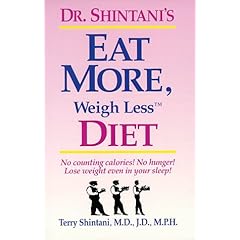
3. Eat More, Weigh Less, By: Dr. Terry Shintani
This is a very old book. But it really brings home the point on energy density of foods. Some of the info is outdated (namely the exercise section). But much of the nutritional info holds true. Pick up your copy here...


4. Your Body Revival, By: Dave Draper
Talk about unique writing style. This book has pages and pages of good training information. If you have a remote interest in weight training and/or bodybuilding, you will enjoy this book. Pick up your copy here...


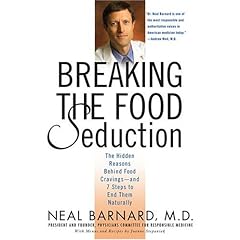
5. Breaking The Food Seduction, By: Dr. Neal Barnard
Love it or hate it, this book has the info to back up food addiction. And it's full of strategies for breaking that addiction to junk food. Pick up a copy here...


6. Skinny Bitch, By: Rory Freedman
Want a book that will help you eat healthier and make you laugh till your obliques cramp? Look no further. This book is a gem. Pick up your copy here...


7. The Beck Diet Solution, By: Dr. Judith Beck
For you cognitive behavioral junkies out there (anyone? ), this book has it all. In fact, if I may be so bold as to say it, I believe this book has the techniques that will build the foundation of weight management treatment in the future. Pick it up here...


8. Fat, Broke and Lonely No More, By: Victoria Moran
I saw Victoria speak at Vegetarian Summerfest and told myself I have to buy one of her books! A lot of practical info. She has a lot of life experience to share. Her writing style makes it an easy read. It is directed to female readers, but us males benefit too. Pick up a copy here...


9. Healthy at 100, By: John Robbins
This covers what it takes to live with both quality and quantity. Nutrition, exercise and lifestyle. This book actually focuses on more than looking good in a tank top. Check it out here...


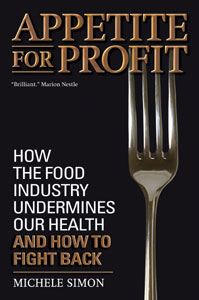
10. Appetite for Profit, By: Michele Simon
Is the food industry twisted? You bet it is! Find out more with this book. Check it out here...


So there you have it - my top 10 weight loss, weight management books. If you're even remotely interested in health, well-being, performance, or body composition, you owe it to yourself to check them out.

And, as always, I'd love to hear which books you think are top shelf as well. So share your book recommendations below.