Really can you believe it? Can you believe that in 2008, that the United States of America has elected their first African-American President?! I can say that I'm not surprised and at the same time shocked. I grew up in an culturally diverse area where I had best friends who were white, Asian, Latino and African American.
In many cases we still encountered many acts of racism, threats, and bias in many situations. Yet we still grew up believing that not everyone feels the same way as those who did these things against us. We believed that "America" was not like that. These people treated us the way they did based solely on our race.
Today I stood in line for over 2 hours in the rain while waiting to vote and I must say that I am proud to see that today my fellow "Americans" have shown that my beliefs as a youth have been shown to be true. That we "Americans" are able to look beyond our skin color and see one another for who we are as people not as different races.
While I don't agree with all of President Elect Barack Obama's view's and policies, I am struck with a thick lump in my throat seeing that an African-American has been elected to the highest office in the country.
I'm proud, in awe, struck with respect, and honored to be an African-American today. I would've never thought that God would've allow me to be alive when we had our first minority president. I"m all over the place with my thoughts and trying to get my words together right now, but I think you all who are reading this can get what I'm trying to say.
Pray for Obama, that he realizes that without guidance and direction from a Sovereign God he can have us in the same situation we have in our country right now (financial crisis, unnecessary war, housing market flop, etc). Pray that everyday, not just in the first few days, months, or years of his term, he is continually reminded of his responsibility and duty to us Americans who voted for him to lead us in this crazy time in our history.
Thomas B. Strong
Wednesday, November 5, 2008

Thursday, October 16, 2008
Contemplation-Consideration-Participation
Day after day I'm amazed at why people seek professional help. Whether the help be from me, their coach, their consultant, or best friend. Many people seek help so they can weigh their options and then decide. Is that really the best thing to do?
I can understand that in some situations they don't need to make a decision right away. However, when you or me or anyone else has goals laid out that need to be accomplished either for our health or for our financial success we need to follow this success simple strategy.
This strategy is so simple it is only one step.
Step 1. When you ask for advice/direction/etc, it is not for you contemplation or your consideration. It is for your participation.
If your car is out of gas and you ask your mechanic what is wrong with it and why it wont start and he replies, "It seems that you need gas, put some gas in it and you'll be set". Do you contemplate whether or not that is the best thing for you? Do you say to yourself...I don't know I think it needs oil. Or maybe it needs windshield wiper fluid. Of course you don't!
You know if your car isn't starting and the gas gauge is on E that you need gas. The E doesn't stand for exhaustion, and your car doesn't need to just rest.
Now let me switch gears and sit on my soapbox for a second here. This may sound harsh to some but it's my blog and I can say what I want how I want :).
If you ask your trainer/coach (me) what you need to do to get rid of fat on your (insert body part here) and I give you a an answer based upon my experience and expertise, know that your bodyfat will not leave your body as long as you contemplate and/or consider my response. It will not leave that area until you participate and follow that advice.
If there is one thing that burns me up it is when someone asks (and pays) you for your advice and after you give it (knowing 100% that it will get results) the person does nothing with that information. It's like the old saying that knowledge is power. Really that is not true. Applied knowledge is power.
So the moral of this story is. If I say you need to change your diet in order to drop fat, then change your diet. If I say to change your workout in order to see results then do it. Don't be paralyzed by contemplation and consideration. Begin the act of participation.
Step 2. Follow Step 1 over and over.
Thomas
I can understand that in some situations they don't need to make a decision right away. However, when you or me or anyone else has goals laid out that need to be accomplished either for our health or for our financial success we need to follow this success simple strategy.
This strategy is so simple it is only one step.
Step 1. When you ask for advice/direction/etc, it is not for you contemplation or your consideration. It is for your participation.
If your car is out of gas and you ask your mechanic what is wrong with it and why it wont start and he replies, "It seems that you need gas, put some gas in it and you'll be set". Do you contemplate whether or not that is the best thing for you? Do you say to yourself...I don't know I think it needs oil. Or maybe it needs windshield wiper fluid. Of course you don't!
You know if your car isn't starting and the gas gauge is on E that you need gas. The E doesn't stand for exhaustion, and your car doesn't need to just rest.
Now let me switch gears and sit on my soapbox for a second here. This may sound harsh to some but it's my blog and I can say what I want how I want :).
If you ask your trainer/coach (me) what you need to do to get rid of fat on your (insert body part here) and I give you a an answer based upon my experience and expertise, know that your bodyfat will not leave your body as long as you contemplate and/or consider my response. It will not leave that area until you participate and follow that advice.
If there is one thing that burns me up it is when someone asks (and pays) you for your advice and after you give it (knowing 100% that it will get results) the person does nothing with that information. It's like the old saying that knowledge is power. Really that is not true. Applied knowledge is power.
So the moral of this story is. If I say you need to change your diet in order to drop fat, then change your diet. If I say to change your workout in order to see results then do it. Don't be paralyzed by contemplation and consideration. Begin the act of participation.
Step 2. Follow Step 1 over and over.
Thomas
Monday, September 29, 2008
What is it worth to you
What is your __________ worth to you? This is really the fundamental question about your values? When you say you value something, you are really saying this is worth a lot to me.
Your:
Perform your own assessment and see what things are worth the most to you in your life.
B. Strong
Your:
- husband or wife
- health
- marriage
- job
- finances
- faith
- appearance
- children
- reputation
- character
- integrity
Perform your own assessment and see what things are worth the most to you in your life.
B. Strong
Monday, September 22, 2008
What's In Your Food
What's In Your Food
Last month, I posted several entries about simple, yet effective nutritional strategies. The message was clear, eat real food and stay away from the processed, artificial junk that fills most store shelves. Forget about all the fad diets, complex calculations, and worries that you were a few decimal points shy of hitting a certain nutrient percentage for the day.
I don’t follow any diets. I don’t count calories and I don’t count nutrient ratios. If you do, that is fine, but don’t spread fear to those who prefer a more basic approach to life (there are bigger problems in our world today). The Keep It Simple approach to nutrition works well, even if it isn’t very marketable from a business standpoint.
Personally, I eat real food when I’m hungry (ex. fruits, veggies, meats, eggs, fish, nuts, etc.), and I bust my butt in the gym. If I want to go out for a nice bite to eat, I go out and don’t lose sleep over it. Nutrition doesn’t need to be complex. More and more people want to discuss the nutrient habits of our ancestors (which is fine), but many who do seem to forget that our ancestors didn’t sit around the fire calculating specific ratios on the abacus.
Furthermore, why do so many nutritionists harp on the importance of reading the labels? What happened to eating food that doesn’t have a label? Why not instead promote fresh foods that will spoil? If you pick an apple from a tree, it doesn’t come with a label. The more real food that you can eat, the better. If you must fall back on an old chemistry class to determine the ingredients listed on a package, there is a good chance that it was not intended for human consumption.
And for a comical take on reading the labels, take a look at the video below. You won’t run into these problems if you simply eat real food from a plant or animal.
Friday, September 19, 2008
Let A Kid Be A Kid Part 2

I couldn’t have asked for a better (worse actually) follow up to my last entry. Nine-year-old Jericho Scott (pictured above) was recently told by the Youth Baseball League of New Haven, Connecticut that he is too good to pitch in the league (full story here). The eight league team, with approximately 100 players has decided that Jericho throws the ball too fast for the rest of the league.
Connecticut is a small state. My own state is kicking kids out of little league because they are too good! What the hell is going on? What kind of message are we sending our kids? Let’s all play nicey nice, but let’s not try to be good at anything. Should we all get together in a group hug and start playing with foam baseballs instead?
Pure Nonsense
The league’s attorney Peter Noble had the following to say regarding Scott’s pitching ability:
“There are a lot of beginners. This is not a high-powered league. This is a developmental league whose main purpose is to promote the sport… Facing that kind of speed is frightening for beginning players…”
How is kicking a 9 year old boy out of the league promoting the sport? As for the comment about beginners, Jericho is only 9 years old! It isn’t as if he’s been playing baseball for 10 years. He is just as young as everyone else, and he’s never even beaned another player while pitching. It seems like the league has enacted a ban-him-just-in-case law.
And for those who are not familiar with New Haven, it is a rough city with gang violence and more than its share of drug activity. Cities such as New Haven need more kids on the baseball field! We can’t turn kids away because they are too good.
The parents who made this decision should be ashamed of themselves. After all, it isn’t as if the 9 and 10 year olds had a meeting and decided to ban Jericho from the league. It is obvious that the parents got together and made this decision. What message is a parent sending his or her own kids? They can play sports, but they should never face an opponent who might be better? Should we pretend that everything in life is fair and even? Should we pretend that there are no challenges in the world? Is that the message we want to send our kids? Is that going to help little Johnny become a better person?
When I played little league, there wasn’t a 9 and 10 year old league. We played with the 12 year olds. At 9 years old, a 12 year old is an imposing monster on the mound. That was part of the fun. There was nothing better than a base hit against a pitcher who was a few grades above you in school. That is what we called bragging rights! Sure, we all had moments of nervousness when an older pitcher threw some high heat, but that was just part of the fun!
No one was kicked out of the league for being too good. We busted our ass for playing time. No one wanted to sit on the bench. Playing baseball wasn’t about being fair. It was about working hard to earn more time on the field. Working hard to become a better player. Working hard to give your team a better chance at winning. These are lessons that carry over into the real world.
Sooner or later your kids will figure out that life isn’t all fun and games. I’m not suggesting that we throw our children to the wolves, but little league baseball shouldn’t be confused with a rabid pack of wolves. Let kids be kids!
Thursday, September 18, 2008
Let A Kid Be A Kid Part 1
By Ross Enamait

Below is an excellent article about safety and kids, and the potential problem that one has on the other.
Why Safe Kids Are Becoming Fat Kids
The author discusses several modern safety measures that didn’t exist when we were kids. The world has changed however. Kids no longer are encouraged to get outside and play. There is no freedom to explore and do the things that kids would naturally do. There are even certain school districts that have banned running at recess. Running has been deemed too dangerous! What the hell is wrong with our world!
When and why did the world become so soft? What happened to letting a kid live a little? Is it really that bad? As kids, we grew up outside. No one wanted to sit inside and play video games. We grew up playing baseball, tackle football, pick up basketball games, etc. We would have stayed out all night if sun didn’t go down.
Sure, there were times when I came home with bumps and bruises, but that was just part of growing up. Life isn’t supposed to be cake walk. Why fool kids and pretend that it is? If you never learn to take calculated risks as kids, how can you be expected to take calculated risks as adults? No one is suggesting that we all live recklessly, but there are times when it makes sense to go against the grain. Almost every successful person in this world did just that on his or her way to the top.
Today, we preach safety and sameness. Kids are always being reminded to take it easy. Don’t do this, don’t do that, be careful with this, be careful with that, etc. The outdoor fields are empty. When I take my son to the playground, we are usually alone. No one else is outside playing. Should it come as a surprise that adults in today’s world struggle with obesity?
What will come next? Will our kids be banned from going outside? Is it too dangerous? Should we all walk around with safety masks? Should we live inside protective bubbles?
The world needs to lighten up. A few bumps and bruises are the end of the world. There are much bigger problems faced by millions of people around the world. Let your kids live a little and get outside with them. Leading from the front is the only way to lead, and your kids will learn by watching you!
Ross
PS - Here are two related entries (here and here)
PPS - Yes, the image above is of me at age 9. What isn’t shown is me crashing into the floor after jumping off my bed in an attempt to look like I could fly. My brother was the remarkable camera man who was able to jump out of the way before I crashed into him. Nothing beats the good old days!
Wednesday, September 17, 2008
Healthy Digestion
Everyone knows that a healthy digestive track is one of keys to proper health and vitality. Here is a video of what happens when you really take care of your self and add plenty of fiber to your diet.
Good Gut Health Video
Good Gut Health Video
Tuesday, September 16, 2008
Classic Workout Video
I was looking in my video treasure chest and came across this classic video. It shows what happens to a woman's body when she focuses on the right diet and exercise program. All women should aspire to follow this lead.
Let me know what you think.
WORKOUT VIDEO
Thomas
Let me know what you think.
WORKOUT VIDEO
Thomas
Monday, September 15, 2008
Do You Know Your S/*%$!
It’s unbelievable. Over 31 percent of the typical mini-van driving, TiVo watching, Lucky Jean’s wearing, Prozac popping, spray-on-tan sporting American hasn’t taken a crap in the last three days! This is the same segment of the world’s population who insists that it is “civilized” because they have a functional public sewage system.

In the same regard, their personal sewage systems (digestive tracts) are backed up with putrid, foul, and festering feces. If only they were as concerned with the “colon compost collection” leaking through their gut wall into their bloodstream and wreaking havoc on their immune system, causing such avoidable diseases as arthritis as they are with catching a glimpse of Janet Jackson’s nipple during Super Bowl XXXVIII, they’d be in much better shape. It’s all about the poop!
Read on if you are kept up at night with a strange “gut feeling” (forgive the pun) that you are needlessly suffering from a plethora of irritating, yet manageable, but still nasty little chronic conditions such as:
- bad breath
- skin rashes
- foggy thinking
- poor energy or fatigue
- headaches
- excessive farting or burping
- paunch belly (“bloated gut”)
- joint problems
- fungal infections
- constipation
This list can go on for days!
You are very likely suffering from toxic overload due to severely dysfunctional digestion. Prior to our days of processed foods, proctologists and Prilosec, ancient physicians diagnosed the onset of disease by analyzing physical and emotional symptoms as well as urine and feces. They would smell, touch, and TASTE their patient’s poop in order to make a correct diagnosis as to the infestation of parasites or the presentation of blood or mucus. They also used the urine and feces to determine any internal imbalances.
Today, your doctor may ask you for a stool sample on rare occasion, but for the most part, patients and practitioners have lost touch with the essential art of fecal examination as a means for maintaining good health and diagnosing disease. If you are as obsessed as I am with maintaining superior health, strength, and vitality well into your middle and old age, you NEED to read and absorb this article and proceed with the practice of poop screening on a daily basis. If you are even going on a daily basis…we’ll discuss constipation in another article.
Know your sh--! Paul Chek created the diagram below to help his patients understand what to look for in the bowl after an “excretion episode.” Study the pictures, and perhaps you’ll notice a character that looks like the creature staring back at you from the throne. Below the diagram, I’ve given a brief description of each poop animation, the cause for his existence, and a few tips on how to defend yourself against him.

Poopie line up (from left to right). This image is from Paul Chek’s, “How to Eat, Move, and Be Healthy.”
Sinker n’ Stinker: This guy is named as he behaves. He is like a smelly piece of black coal that sinks to the bottom of the bowl after an arduous attempt to squeeze him out with tremendous force. His appearance is due to an overexposure to toxins such as processed foods, environmental toxins, and medical drugs.
The Swimmer: This guy is light in color and floats. He is a pain to flush. His appearance is due to a high content of undigested fat.
Bodybuilder: This dude is jacked! He is typically big and round. He makes you strain to get him out. If you pop a blood vessel in your eyeball when you poop, you’ve probably met this guy. His appearance is due to eating too many protein bars and shakes.
Pellet Man: He looks like rabbit poop. His appearance is due to altered states between peristalsis and dehydration.
Diarrhea: “If you’re sliding into first and you feel something burst…” This guy needs no introduction. His appearance is due to your crappy diet and your body’s attempt to purge you of it.
The Flasher: If you can identify what you’ve eaten by looking at your poop, you are being flashed! Undigested food particles making an appearance in your bowl are a sure sign that this guy has crashed your party. His appearance is due to food intolerance and an inflamed gut wall.
The Poopie Policeman: This guy is “the sh--!” He is what all of our poop strive to look like. He is well-shaped (with a consistent contour), passes easily, is light brown in color, and smells earthy, not foul. Yet, he floats…but not too much. Mmmm.
Friday, September 12, 2008
Why You Need A Coach

For most of you reading this who used to compete in sports, think back to your younger days. Can you imagine stepping on the field without the direction of a coach? Without someone calling the plays? Without someone providing structure and discipline? Without someone making you do the things you hated or without setting standards and providing goals that were high, yet attainable? Can you imagine competing without that “coach” who probably knew more about you than you knew about yourself?
In life, I feel that we all need coaches and that we all have the potential to be great coaches in some aspect. However, my definition of coach is not limited to sports. A coach can be a teacher, business owner, mentor, or anyone who guides someone else or an organization to reach their potential.
The following is a list that I feel all great teams, organizations, and individuals have:
- Discipline: Ever see a successful business where the employees come in whenever they feel like it? Ever see a successful team with no guidelines or disciplinary procedures for those who skipped practice? I see success as reaching your potential. Champions raise the bar even further. We have all seen that team with all the talent in the world but that never seems to win. If you’re a good coach, you have discipline because without it, you have nothing.
- Work ethic: It’s true that to reach the top of your given field you have to have some “natural talent.” If you are 5’6” with no athletic ability at all, maybe the NBA isn’t for you. However, for the most part, it’s overrated. If you take a look at champions from any sport or life endeavor, they worked harder than most, if not all, of those beneath them. You want to be like Tiger? Then maybe you should have started hitting golf balls when you were two years old. You want to be like Mike? Wake up every morning at four and start practicing your jump shots. If you’re a good coach, you will make sure your athletes work hard and smart.
- Goal setting/focus: Being able to set goals is important. They have to be high but achievable. You have to have short- and long-term goals or else you won’t be able to stay focused for the long haul. Goals need to be broken down into years, months, days, and even hours. If you’re coaching a team that says they want to be champions but can’t focus on what is important right now such as practice, forget about the long-term goal.
- Mental toughness: The goal that you set above (if it’s worth anything) will be tough to reach. You will have setbacks. The strong will fight through it. The losers will give up.
- Motivation: A good coach is able to find out why their athletes are doing what they’re doing and how to get even more out of them. This extrinsic motivation needs to be internalized as intrinsic motivation inside that person. Most major changes in a person’s life come after some failure or the realization that they are not even close to their potential. Motivation needs to be individualized, and it comes in many forms, though anger is the most common. Anger is a strong energy, and if channeled the right way, can make your average person downright dangerous in a good way. Remember those people who told you “you can’t.”? The company that didn’t hire you? The person who wouldn’t give you a reference? The times you failed and had to look yourself in the mirror for what you truly were?
- Consistency: All of the above need to be done over the long haul. If you want to be Tiger but you’re just picking up the clubs at 25 years old, you might need to find another profession. It takes years of the above to be successful (see my definition) at anything.
You can not do it alone because knowledge is necessary to reach your goal. Take a look in the mirror now. See yourself for who you really are and what you want to be. Print out this article and read it again in the near future. If you see the same person, analyze what you have been doing since you first read this. If you see a different person, stay on that same path that leads to success.
Thursday, September 11, 2008
Go Long, Live Short?
I don't find this surprising:
Healthy men over 50 who had finished at least five marathons in the last five years were more likely to have major calcium deposits in their arteries than healthy men who did not run as much, according to a study presented yesterday at an American Heart Association meeting in Chicago.
Calcium buildup is a sign that arteries are hardening, even when patients lack other symptoms. ...
About 36 percent of the 108 male marathon runners in the study had coronary artery calcium scores above 100, possibly a sign of increased cardiovascular risk. Similar scores were seen in 22 percent of 216 men who did not run and had risk factors for heart disease similar to those of the marathon group.
Dr. Möhlenkamp said he got the idea for the study after hearing about some healthy older male runners who had heart attacks when running marathons. As a man who runs about 12 miles a week, he said, he was surprised by the possibility that long-distance running might pose heart risks.
To my scientifically untrained eyes, that doesn't look like a huge difference in the study group and the control group. If 22 percent of the non-runners have these elevated calcium levels, vs. 36 percent of the marathoners, what's the actual increased risk from running marathons? The crude math says it's 61 percent higher, but I have no idea the extent to which calcium levels are associated with mortality.
My instincts and experience tell me that there's a point of diminishing returns with any type of exercise. The only studies I've seen on the subject (from the Harvard Alumni Health Study) showed an L-shaped association between exercise and longevity: The guys who did no exercise had the highest mortality rates, while the ones who did the most were about at the same risk level as the ones who did moderate amounts. So we know that some exercise is good, and vigorous exercise is better than moderate or light exercise.
But then there are the individual cases, which I wrote about here. If seemingly healthy middle-aged men drop dead from running or cycling long distances, it seems entirely possible that there's something inherently dangerous about it that we're all missing.
Wednesday, September 10, 2008
They'd Rather See You Die than Admit They're Wrong
I'm an excitable guy, but I don't think I'm going too far off the deep end when I say this story by Adam Campbell in Men's Health has some of the best reporting I've ever seen in a mainstream health and fitness magazine.
Here's how it opens:
It's a wonder no one has tried to have Mary Vernon's medical license revoked.
Since 1999, the 52-year-old family doctor has been treating diabetic patients in Lawrence, Kansas, with an approach that was abandoned by most physicians in the 1930s. Worse, this Depression-era remedy is the opposite of the current guidelines established by the American Diabetes Association, a nonprofit organization that spent nearly $51 million on research in 2005, and so should know a thing or two about how to handle diabetes.
There's no question that Dr. Vernon is trouble -- but for whom? Not her patients, that's for certain. They just won't stay sick. People walk into her office afflicted with type-2 diabetes and, by every objective medical measurement, walk out cured. There's $51 million that says that isn't supposed to happen, not in a clinic in Kansas, and definitely not as a result of cleaning out the refrigerator.
"My first line of treatment is to have patients remove carbohydrates from their diets," explains Dr. Vernon, a petite, energetic mother of two who also serves as the president of the American Society of Bariatric Physicians. "This is often all it takes to reverse their symptoms, so that they no longer require medication."
That's it?
That's it -- a simple strategy, but one that's controversial. If Dr. Vernon and a growing cadre of researchers are correct about carbohydrates, we may be looking at an epic case of ignorance on the part of the medical community. That, however, pales next to the implications for the American Diabetes Association, namely that the very organization dedicated to conquering diabetes is rejecting what could be the closest thing we have to a cure.
I'll let you read the rest on your own, and just add this:
Not only do we know the cure for diabetes, we know how to prevent it, just as we know how to prevent obesity. Cut the carbs, kill the disease.
The lengths to which we go to ignore the obvious are astounding now, and promise to get even more absurd as society pays an ever-greater price for our corpulence and the diseases associated with it. For example, in the UK, the national health service may soon pay for gastric-bypass surgery for the most obese adults and teens.
The argument in favor of public financing of these surgeries is that they'll save lives, and perhaps even save money in the long run. It might be cheaper to spend thousands now to staple stomachs rather than spend multiples of that when the obese patients have advanced diabetes and heart disease, requiring expensive drugs and perhaps even amputations.
The argument against?
Dr. Geoff Rayner, a public health expert at City University, said: "We are medicalising something that is actually to do with how we live as a society. People become overweight because of their environment -- because we take a car rather than walk, because we spend hours in front of the TV, and because we are saturated by a junk-food industry. If you take a purely medical approach to this, you start to normalise what is a deeply abnormal state."
Oh, and did we mention the carbs?
Here's how it opens:
It's a wonder no one has tried to have Mary Vernon's medical license revoked.
Since 1999, the 52-year-old family doctor has been treating diabetic patients in Lawrence, Kansas, with an approach that was abandoned by most physicians in the 1930s. Worse, this Depression-era remedy is the opposite of the current guidelines established by the American Diabetes Association, a nonprofit organization that spent nearly $51 million on research in 2005, and so should know a thing or two about how to handle diabetes.
There's no question that Dr. Vernon is trouble -- but for whom? Not her patients, that's for certain. They just won't stay sick. People walk into her office afflicted with type-2 diabetes and, by every objective medical measurement, walk out cured. There's $51 million that says that isn't supposed to happen, not in a clinic in Kansas, and definitely not as a result of cleaning out the refrigerator.
"My first line of treatment is to have patients remove carbohydrates from their diets," explains Dr. Vernon, a petite, energetic mother of two who also serves as the president of the American Society of Bariatric Physicians. "This is often all it takes to reverse their symptoms, so that they no longer require medication."
That's it?
That's it -- a simple strategy, but one that's controversial. If Dr. Vernon and a growing cadre of researchers are correct about carbohydrates, we may be looking at an epic case of ignorance on the part of the medical community. That, however, pales next to the implications for the American Diabetes Association, namely that the very organization dedicated to conquering diabetes is rejecting what could be the closest thing we have to a cure.
I'll let you read the rest on your own, and just add this:
Not only do we know the cure for diabetes, we know how to prevent it, just as we know how to prevent obesity. Cut the carbs, kill the disease.
The lengths to which we go to ignore the obvious are astounding now, and promise to get even more absurd as society pays an ever-greater price for our corpulence and the diseases associated with it. For example, in the UK, the national health service may soon pay for gastric-bypass surgery for the most obese adults and teens.
The argument in favor of public financing of these surgeries is that they'll save lives, and perhaps even save money in the long run. It might be cheaper to spend thousands now to staple stomachs rather than spend multiples of that when the obese patients have advanced diabetes and heart disease, requiring expensive drugs and perhaps even amputations.
The argument against?
Dr. Geoff Rayner, a public health expert at City University, said: "We are medicalising something that is actually to do with how we live as a society. People become overweight because of their environment -- because we take a car rather than walk, because we spend hours in front of the TV, and because we are saturated by a junk-food industry. If you take a purely medical approach to this, you start to normalise what is a deeply abnormal state."
Oh, and did we mention the carbs?
Tuesday, September 9, 2008
Dead Man Running
Dead Man Running
It's been more than three years since Lou Shuler wrote "Death by Exercise," a look at the surprisingly high body count associated with serious endurance training. And yet, running marathons is more popular than ever. (Nice to know I've had such a profound influence on the exercise culture.)
As you might expect, the body count is rising:
This has been an unusual season for the cardiac health of marathoners. After years in which almost no deaths were attributed to heart attacks at this country’s major marathons, at least six runners have died in 2006.
Two police officers, one 53, the other 60, died of heart attacks at the Los Angeles Marathon in March. The hearts of three runners in their early 40s gave out during marathons in Chicago in October, San Francisco in July and the Twin Cities in October. And at the same marathon where Mr. Turner was felled, another man, 56, crumpled near the 17th mile, never to recover.
This year’s toll has sobered race directors and medical directors of marathons. But, as Rick Nealis, the director of the Marine Corps Marathon, said, “Statistically, maybe, it was inevitable.”
The risk is still small -- an estimated 1 in 50,000 marathoners will die with a race number pinned to his chest -- but researchers are finding more signs of cardiac damage from racing, on top of a higher risk of skin cancer and at least one scary thing I can't even pronounce.
There's nothing in the new research that suggests major health problems are inevitable with marathoning. The best conclusion is that it's dangerous and ill-advised for some. But that brings me to something I find mystifying:
If someone is new to strength training, no one suggests that he immediately start bulking up for powerlifting or bodybuilding competition. It's understood that very few people have the kind of genetics that make such ambitions realistic.
And yet, I'd guess that most people who start running have, somewhere in their minds, the idea that they'll someday run a marathon. And it seems to me that the running industry cheers them on.
I don't read running magazines, so I can't say this for sure, but I'd be surprised to find many precautions against long-distance running in their pages. Books about training for marathons tend to outsell my books about progressive strength training for beginners and intermediates.
Some of the titles are kind of disturbing, too. Take, for example, The Non-Runner's Marathon Trainer. If I wrote a book called The Non-Lifter's Guide to Competitive Powerlifting, I wouldn't sell a single copy. But somehow a book about extreme endurance training for novices is considered perfectly reasonable.
Am I the only one who finds that strange?Monday, September 8, 2008
Death by Exercise
Hundreds of guys -- including some of the world's fittest men -- have taken their final breaths while wearing running shoes. Here's how to outsmart the reaper
By:
Guy goes out for a run. It's just a 4-miler--nothing, really, to a seasoned marathoner who usually runs 10 miles a day, 7 days a week. Nobody knows why he stops 40 or 50 yards short of his front door--maybe he's checking his pulse, maybe he's tying a shoe--but everybody knows what happens next to Jim Fixx, the 52-year-old patron saint of running: He dies.
You've heard that story. But you may not know about Edmund Burke, Ph.D., who was to serious endurance cycling what Fixx was to running. He died on a training ride last fall, at age 53.And you almost certainly haven't heard of Frederick Montz, David Nagey, or Jeffrey Williams, three brilliant physicians at Johns Hopkins University who died while running. The oldest of the three was 51.
You'd think that exercise icons should live to be 100. And yet, every year, a few of them go permanently offline at half that age.
Two questions arise. The first is obvious: Why do the hearts of such highly conditioned men fail during exercise designed to make their hearts stronger? The second is so radical it borders on treason against the health and fitness cause: Is there something wrong with the entire notion of endurance exercise as a healthy, life-extending activity?
I've been skeptical about the benefits of aerobic exercise for years. But the answers surprised even me. Pull up a chair--you'll want to be sitting down when you read this.
The Road to Nowhere
The idea that a well-trained endurance athlete could just drop dead was unfathomable a generation ago. Thomas Bassler, M.D., went so far as to say that anyone who could finish a marathon in less than 4 hours could not have serious heart problems. He conducted a study on 14 marathoners who had died of cardiovascular disease, and concluded that all were malnourished. Unfortunately, he reported this conclusion in the July 27, 1984, edition of the Journal of the American Medical Association. Fixx had died 7 days earlier.
Nobody today believes that endurance training confers immunity to anything, whether it's sudden death from heart disease or the heartbreak of psoriasis. Every time you lace up your running shoes, there's a chance your final kick will involve a bucket, and every expert knows this.
"I think the risk is inescapable, and it's bigger than we're letting on," says Paul Thompson, M.D., director of preventive cardiology at Hartford Hospital in Connecticut and a researcher who studies sudden death and exercise. One of Dr. Thompson's studies showed that 10 percent of the heart attacks treated at his hospital were exercise related. "Those heart attacks tend to be in people who aren't fit," he says. "But that doesn't mean that's the only group that gets it, unfortunately. There are these very fit guys who go out for a run and drop dead."
Dr. Thompson's studies and others show that the chances of sudden death are about one in every 15,000 to 18,000 exercisers per year. That comes to one death for every 1.5 million exercise bouts. Curiously, the most serious endurance athletes seem to be at the greatest risk. Here's how it breaks down, according to an often-cited 1982 study published in the New England Journal of Medicine:
- One death per 17,000 men who exercise vigorously 1 to 19 minutes a week
- One death per 23,000 men who exercise vigorously 20 to 139 minutes a week
- One death per 13,000 men who exercise vigorously 140 or more minutes a week
I had to look at the chart twice to see its startling conclusion: The highest death rate is among the men who exercise long and hard, and is much higher than that of the men who exercise short and hard. Worse, the guys who do hardly any vigorous exercise had a lower death rate than the guys who do the most.
About a zillion studies -- I lost count in the millions -- have shown that aerobic exercise leads to a healthier heart and a longer life.
So I have to wonder why more of such a healthy activity is worse, rather than better.
Sweatin' to the Oldies
In 1970, a study of San Francisco longshoremen made a strong argument that physical activity helps prevent heart disease. The longshoremen who got promoted to mostly sedentary management positions developed heart disease 25 percent more often than those who worked on their feet.
An important note about this study, and similar ones that preceded it: The subjects weren't doing formal, steady-pace endurance exercise. They were walking and stopping, lifting things up and putting them down.
Numerous formal exercise studies followed, many of them attempting to quantify how much physical activity is needed to prevent heart disease, and at what intensity levels. The Harvard Alumni Health Study found that heart-disease risk starts going down when you expend more than 500 calories a week and continues to decrease until you get to 2,000 calories a week. Then things level off--more exercise doesn't offer more protection.
The bottom number isn't much exercise; a 200-pound man walking 2 hours a week at 3 mph will burn 600 calories. And the top number isn't particularly intimidating, either. Our 200-pounder would have to run about 16 miles at a 12-minute-mile pace to burn 2,000 calories a week. (Lighter guys will burn fewer calories per minute or mile; bigger men will burn more.)
Intensity is a separate issue, with some studies showing that moderate-intensity exercise (walking, bowling, playing golf) helps your heart, and others showing little benefit until you start cranking (running, lifting serious iron, playing basketball or soccer).
Still other studies measure heart-disease risk by activity level, and these show something really interesting: Once you get past the 75th percentile of physical activity--guys who exercise more than three-quarters of the population--protection against heart disease levels off. In fact, among the most active, it actually declines slightly, according to a review in Medicine & Science in Sports & Exercise. In other words, the superactive are more likely to die than the merely active.Snow Problem
One reason it's so hard to understand the whole death-by-exercise phenomenon is that so few people die during formal exercise--there are only about 100 cases per year. So it helps to look at those who suffer heart attacks during heavy physical exertion in general, rather than fitness activities in particular. One important study, published in the New England Journal of Medicine in 1993, looked at 1,228 nonfatal heart attacks, 54 of which occurred during or soon after serious exertion. (The cutoff point was 6 metabolic units, or METs. This means the exertion was greater than or equal to six times the energy required by a body at rest. Heavy strength training is considered a 6-MET activity, as are wood chopping and snow shoveling; running 12-minute miles racks up 8 METs.)
The researchers divided the cases into three categories and found that about 18 percent of the exercise-induced heart attacks occurred during lifting and pushing, 30 percent during jogging or sports (racquet sports in particular), and 52 percent during yard work, such as splitting wood.
And that brings us to a major cause of death by exertion: snow shoveling.
A researcher at William Beaumont Hospital in Royal Oak, Michigan, tallied 36 snow-related deaths in the Detroit area following two heavy storms. (Curiously, several of the victims were using snowblowers.)
It's easy to see why frozen precipitation scores such a high body count. "Heart rates go up like a maximal treadmill test," says Barry Franklin, Ph.D., director of cardiac rehabilitation and exercise laboratories at the Beaumont hospital. "Combine that with cold weather, which constricts arteries, and you have a prescription for disaster."
An interesting point: The men who shovel off to meet their makers following a snowstorm, or who have to call an EMT after putting ax to wood, aren't doing aerobic activities. There's no endurance component. Snow shoveling and wood chopping are anaerobic activities--strenuous efforts that can't be continued longer than a few minutes without stopping to rest.
In other words, these activities resemble strength training and are very different from running or cycling. So you'd probably guess that weight lifting also has a pumped-up body count.
Nope. In fact, it has virtually no body count. A few guys a year die from dropping barbells on their tracheas, and some strokes turn up in the literature, but you'd be hard-pressed to find any cases of heart attacks associated with weight lifting. Post-cardiac-arrest patients are regularly trained back to health with weights, and I couldn't find any references to any of them dying, either.
Strength training protects your heart in two ways: First, says Franklin, you get a predictable increase in diastolic blood pressure, which governs the return of blood to your coronary arteries. (If your blood pressure is 120 over 80, 80 is the diastolic number.) That's different from aerobic exercise, in which systolic blood pressure (the first number) rises but diastolic pressure stays the same or possibly even decreases. Both numbers go up by quite a bit when you lift, which means blood is being pushed back to your heart with equivalent force.
Second, most of us tend to hold our breath briefly while lifting. This increases blood pressure dramatically and used to scare the daylights out of doctors, who feared aneurysms could result. But new research from the University of Alberta in Edmonton shows that brief breath-holding actually exerts a sort of counterpressure on arterial walls that neutralizes the rise in blood pressure. Aneurysm avoided.
In other words, your body seems designed to protect itself during brief, heavy exertion and lifters shouldn't ever have to worry about death by exercise.
Final Exam
However, don't bank on it. The fact that hardly anyone dies during strength training doesn't prove it can't happen. Barry Franklin points out that the men at greatest risk of sudden death during exercise are middle-aged; most lifters are young. More of us older guys are lifting today, but when the studies I've cited in this story were put together, in the '80s and early '90s, you didn't find many gray-hairs in the weight room. If a middle-aged guy was exercising, he was most likely running, riding a bike, or swatting at a fuzzy yellow ball.
But now we do have a substantial population of middle-aged men in health clubs, and we know a few of them will do their final cooldowns at the county morgue. Franklin recently looked at exercise-related deaths at a major chain of health clubs. Using swipe-card data, he tallied 183 million gym visits in the study period, during which time 71 members died while working out. It's not known what the deceased were doing at the fatal moment, so we can't draw many definitive conclusions.
But Franklin did find two interesting trends in the data: The average age of club members was 32. The average age of the 71 who died was 53. The 71 also averaged just two trips to the club per month. It's possible they were exercising outside the gym, but Franklin doubts it. If they had been, most of them would probably still be alive.
And that's the most reasonable conclusion one can draw about death by exercise: The best way to avoid it is to exercise. "The person who's at greatest risk of an exercise death is the person with known or hidden coronary artery disease who is habitually sedentary--a couch potato, all year round," says Franklin.
You don't need to turn into a marathoner. (Look what happened to Pheidippides.) But you should work out frequently; many studies have shown that the overall amount of time you spend up and moving matters.
Some endurance exercise is fine, if you like it. Strength training is probably more than fine--it specifically prepares your body for the shock of sudden, strenuous exertion, such as shoveling snow, which is most likely to kill you if your body isn't ready for it.
We can't attach any sort of dose-response number to weight lifting as a preventive to sudden death, but we do know it's pretty hard to kill yourself while doing it. For example, if you assumed that every death recorded at the health clubs occurred during strength training, you'd still end up with just one fatality for every 2.5 million exercise sessions, which is lower than the one in 1.5 million that shows up in older studies of mostly aerobic exercisers.
But any time you exercise strenuously, on the road or in the squat rack, you're taking on a small risk of a big problem. "It's like investing in the stock market," says Dr. Thompson. "You're putting your money down, looking for a long-term gain. But you could put your money in WorldCom and lose it all. There's a risk to everything."
Thursday, September 4, 2008
Mentorship, Support and Accountability Part 2
Mentorship, Support, Accountability - Part 2
The Hopeless Doctor
by John M Berardi
The Hopeless Doctor
by John M Berardi
Today's message is an important one for anyone who's ever gone to see a doctor in their lives. Uh, that's right, this means you.
A Little Background
We recently brought on 3 new members of the Precision Nutrition team. Interestingly, one of the 3 has epilepsy.
Having no experience with epilepsy, but having a deep curiousity, I've asked this new team member a ton of questions. Further, I've done a lot of independent study.
I wanted to know what epilepsy is, how it impacts people's lives, and which treatments are available for those living with epilepsy.
Interestingly, during my research, I discovered that there's actually a dietary treatment for epilepsy!
Indeed, the research is now showing that, in adults, a ketogenic (very low carb diet) can reduce the incidence of seizures in epileptics by about 80-90%. This is huge...it means that if you normally had 10 seizures per day, you'd have just 1 or 2.
If you know anyone living with epilepsy, ask them what that would mean to
their lives.
They Kept This From You?
Of course, I assumed our new team member was either following this approach or had tried it in the past.
When I inquired, the answer shocked me. Not only hadn't she tried a ketogenic diet, her doctors had never even mentioned the diet to her!
Instead, they decided to "manage" her epilepsy with 1 highly invasive brain surgery and a never-ending stream of prescription meds.
Highly pissed, we called up her doc and did a little 3-way conference call.
"Thanks, Dr. Berardi for your concern. However, the ketogenic diet is much too difficult for adults to follow. So rather than wasting time with this, I recommend another surgery."Highly pissed barely describes my response.
This doc was actually recommending more meds AND another surgery - yet wouldn't even consider giving her a month or two to try the dietary approach!
Ketogenic Diets and The Physique Community
At this point, let's take a quick step back so we can be clear on what this wild, wacky, impossible-to-follow diet consists of.
A ketogenic diet is basically a diet that's high in lean proteins and healthy fats while also being fairly low in carbs. Uh, that's it.
As anyone that's been involved in the physique community intimately knows, whether they want to step on the fitness and/or figure stage or whether they simply want to look great on the beach, this is the exact diet that most folks use when trying to get lean.
So, when I heard the doc dismiss this diet as "impossible for adults to follow" I almost lost my mind.
Sure, it certainly takes some effort to learn how to follow a ketogenic diet. Especially if it's much different from your "normal" intake. But IMPOSSIBLE? I think not.
Docs and Diet
After I cooled off and gave this situation some rational thought, I realized that this isn't at all unusual. In fact, it's just the way that the medical system works.
- Got type 2 diabetes? Take these pills.
- Got heart disease? Here's a bypass surgery and 5 bottles of pills.
- Got epilepsy? Here's a brain surgey and 3 more bottles of pills.
Isn't that really scary? Nowadays, adults aren't even given the info to make a choice. And if they do ask, they're even discouraged from discussing their options.
Unless, of course, the options are surgery and pills.
But Why Bother
You know what, though. What else should we expect. After all, what if the docs actually did start recommending dietary treatments? Without some guidance and support, people would be doomed to failure anyway.
Can you imagine having epilepsy and having your doc say the following:
"You know, a ketogenic would help you reduce your seizures significantly. Just stop eating carbs and you're all set."Uh...thanks doc...
Can I get those pills instead?
Figure It Out Yourself?
Here's another apt analogy. Imagine that we've just hired you on as a member of the PN Customer Service Team. And when you show up for work the first day, there's a note on your desk.
"Welcome to the team...there's a phone on your desk and a computer, too. Customers will call and email with questions. Make sure they all get answered."Imagine that's the extent of your job training. No instruction on how to answer the phones, no instruction on how to access your email account, no instruction on how to respond to the questions themselves, no nothing.
How could you possibly succeed in that environment? Hint: you couldn't. Then, isn't the same true when it comes to fitness and nutrition?
Support Is The Key
Truthfully, the only way to succeed in something new is with support.
In the case of our new staff member living with epilepsy, a good doc would not only tell her all about her dietary options, he'd also provide support such as a referral to a top-notch nutrition coach.
After all, following a ketogenic diet (or any other disease related dietary treatment plan), requires more than a list of what to eat and what not to eat. It almost requires an occupational therapy approach.
In an ideal world, someone would come into your home, do an inventory of what must change to accommodate your new plan,and then help you make this plan part of your life.
- They'd teach you the dos and don'ts.
- They'd teach you how to grocery shop.
- They'd help you with the appliances and utensils.
- They show you how to eat out at restaurants.
- They'd discuss what to do at dinner parties.
- And they'd show you how to make the food taste so good that your family will also want to eat this way.
Is it any wonder that 95% of the folks who lose weight through diet and exercise interventions, gain all the weight back and then some.
The road to changing our lifestyle patterns is long, hard, and perilous. Alone, most people are destined to fail. With support, there's actually a chance to succeed.
Question Of The Day
So, the question of the day is this...who do you turn to for support? Who helps you figure it out? Who's you're lifestyle manager? Your nutritional occupational therapist?
If you're not in the kind of shape you want to be in - and you can't think of a good answer to the questions above - perhaps it's time to start taking applications.
Wednesday, September 3, 2008
Mentorship, Support, and Accountability Part 1
Mentorship, Support, Accountability - Part 1
Who's Your Nutritional Mentor?
by Ryan Andrews
Who's Your Nutritional Mentor?
by Ryan Andrews
What I Learned
Waaayyyy back when I was a kid (well, about 20 years ago), North America was full steam ahead and entering the phase of "really bad nutrition".
While my family did an average job with my nutritional upbringing (especially compared to other families), I was really in the dark. Most of my knowledge was hearsay and based on the media and popular press.

Yikes!
You know, come to think of it, it wasn’t until I became a nutrition professional that I got really comfortable choosing my food each day.
What My Parents Learned
Historically speaking, though, this wasn’t always the case. Many years ago (when my parents and grandparents were kids), there was some decent nutrition advice being passed around from kitchen to kitchen.
Sure, they didn't know much about proteins, carbs, and fats. Nor did they know about antioxidants and phytochemicals. But that's besides the point. What they knew was this...they knew how to shop for, cook, and eat better foods than we shop for, cook, and eat today.

Plus, food advertising bombardments weren't quite so rampant and confusing. Simply put, junk food wasn't advertised as health food like it is today.
The Whimsical Past
Now, I don't want to romanticize the past, as many authors do. It's wasn't all rose-colored bliss.

However, because of fewer options, higher economic pressures, and a different way of life, eating better came naturally to those in the past. And they could actually learn something about eating right from their family, friends, and neighbors.
Fast Forward
Nowadays, good luck my friends.
Dismal nutrition habits are the norm. Indeed, if you're not getting help from someone who actually knows what they’re doing, who are you gonna get it from?
- Dad with high blood pressure?
- Mom with osteoporosis?
- The media who is only concerned with their bottom line?
- The overweight home economics teacher?
The Mentorship and Social Support Survey
A few months ago we ran a survey of a sample of Precision Nutrition newsletter subscribers.
We asked them a number of different questions, some of which were to ascertain their level of fitness, some of which were to test their nutritional knowledge, and some of which were to determine their access to mentorship and social support.
The results were fascinating.
We wanted to know how much of an impact mentorship and social support actually have on a person’s ability to reach their physique goals.
So we asked people to rate their happiness with their own physique on a scale from 1 to 5, like so:
- Extremely unhappy
I’m nowhere near my goal and I doubt I can make it. - Unhappy
I’m far from my goal but I’m willing to do something about it. - Ambivalent
I’m working toward my goal but I’ve got a ways to go. - Happy
I’m close to my goal and making progress. - Extremely Happy
I’ve achieved my goal and I’m working on maintenance now.
What stood out immediately was the fact that there wasn’t a significant difference in nutritional knowledge between the people who had achieved their goals (the 5’s) and the people who were still working on it (the 3’s and 4’s).
The people who achieved their goals knew their stuff (you have to, of course – success is not an accident), but so did many of the “in progress” people. In other words, you need to understand nutrition science – but it isn’t enough to get in great shape.
But then we looked at the response to this question:
“Have you ever had regular mentorship from someone who was in the exact shape you wanted to be in?"
Note: In this context, regular mentorship is defined as constructive and impartial feedback and direction, on a near-daily basis, for a continuous period of at least 3 months.And check this out:
77% of the 5’s said “Yes” (37 out of 48)That’s a remarkable difference!
Only 17% of the 3’s and 4’s said "Yes"
And less than 5% of the 1's and 2's said "Yes"
Think about what that means for a second: you need to know a lot about exercise and nutrition, that’s true; but most of all, you need to find someone who’s where you want to be, and lean on them for help.
Question Of The Day
So, the question of the day is this...do you have somebody in your life that actually knows how to eat well - and is healthy enough, vibrant enough, and fit enough to demonstrate it?
Seriously, do you have someone that can help you work through nutrition problems and troubleshoot obstacles, rather than just telling you to eat more proteins, carbs, and fats?
If you have a good role model in your social circle right now, someone who has already done what you want to do, and someone who can mentor you to success, make the absolute most of it!
If however you don’t already have a mentor like that, FIND ONE IMMEDIATELY.
Tuesday, September 2, 2008
100 Calories of Junk
100 Calories of Junk
Does good nutrition start with Oreos® or Cheese Nips®? Many consumers are led to believe so. The new 100 calorie packs are not a viable solution to the lifestyle related nutrition problems we are dealing with today.
 Food manufacturers usually want the consumer to think health and weight management is all about portions and physical activity. Why? So they can continue to sell junk food. If people actually ate foods that contributed to health and weight management – the word O-R-E-O would not be part of our vocabulary.
100 calorie packs may actually create more problems. How so? Glad you asked.
Well, the 100 calorie packs are marked with the “Sensible Solution” logo.

Your average customer will see this logo and think it is a healthy food. Well, guess what – the Sensible Solution logo was created “in-house” by Kraft®. Genius.
And since we rely on food manufacturers to portion our foods for us - we create more 100 calorie pack bags in the landfills. Not good.
Dietary displacement runs rampant in today’s world. Many people displace healthy, nutritious, real, satiety promoting, muscle building foods with 100 calories of junk.

Sorry Kraft® - - the best thing you can do for the world’s nutrition is shut down operations – or get into the organic produce business.
100 calorie packs may actually create more problems. How so? Glad you asked.
Well, the 100 calorie packs are marked with the “Sensible Solution” logo.
Your average customer will see this logo and think it is a healthy food. Well, guess what – the Sensible Solution logo was created “in-house” by Kraft®. Genius.
And since we rely on food manufacturers to portion our foods for us - we create more 100 calorie pack bags in the landfills. Not good.
Dietary displacement runs rampant in today’s world. Many people displace healthy, nutritious, real, satiety promoting, muscle building foods with 100 calories of junk.
Sorry Kraft® - - the best thing you can do for the world’s nutrition is shut down operations – or get into the organic produce business.
Monday, September 1, 2008
Top 10 Books For Dropping Body Fat
Top 10 Books For Dropping Body Fat
by Ryan Andrews, MS, RD, CSCS
by Ryan Andrews, MS, RD, CSCS
I have to admit it.
2007 has been the "year of the book" for me.
As a Johns Hopkins nutrition adviser and trainer, I've been racking up some serious reading time in order to advance my practice in the world of weight management.
And as I've read pretty much every book I could get my hands on this year, I figured I'd help guide you toward the best of the bunch. So, without much ado, here are my top 10.
Not only with these books provide you with knowledge and behavioral strategies needed to drop body fat, even if you're already lean they'll help you maintain low levels of body fat.
Drum roll please.....
1. Precision Nutrition, By: Dr. John Berardi
I know, I know, I'm an expert on the PN forums so I'm biased, right...Well, sorta. But I'm biased because I use PN with my clients at Johns Hopkins. And I use it with my clients at Johns Hopkins because it works!
Want to learn about finding what nutritional strategy works for you? Pick up a copy of PN.
2. The Metabolism Advantage, By: Dr. John Berardi
Again, another offering from the good doctor. What can I say, I like his stuff. And there's some really good stuff in this book.
Even if you've read PN, this book has some great exercise info and nutrition tips. You can pick up your copy here.
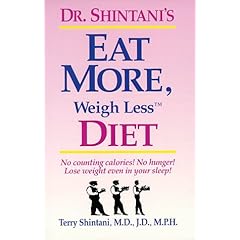
3. Eat More, Weigh Less, By: Dr. Terry Shintani
This is a very old book. But it really brings home the point on energy density of foods. Some of the info is outdated (namely the exercise section). But much of the nutritional info holds true. Pick up your copy here...
4. Your Body Revival, By: Dave Draper
Talk about unique writing style. This book has pages and pages of good training information. If you have a remote interest in weight training and/or bodybuilding, you will enjoy this book. Pick up your copy here...
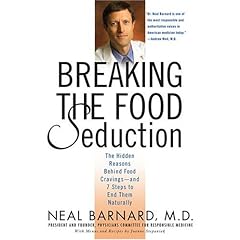
5. Breaking The Food Seduction, By: Dr. Neal Barnard
Love it or hate it, this book has the info to back up food addiction. And it's full of strategies for breaking that addiction to junk food. Pick up a copy here...
6. Skinny Bitch, By: Rory Freedman
Want a book that will help you eat healthier and make you laugh till your obliques cramp? Look no further. This book is a gem. Pick up your copy here...
7. The Beck Diet Solution, By: Dr. Judith Beck
For you cognitive behavioral junkies out there (anyone?), this book has it all. In fact, if I may be so bold as to say it, I believe this book has the techniques that will build the foundation of weight management treatment in the future. Pick it up here...
8. Fat, Broke and Lonely No More, By: Victoria Moran
I saw Victoria speak at Vegetarian Summerfest and told myself I have to buy one of her books! A lot of practical info. She has a lot of life experience to share. Her writing style makes it an easy read. It is directed to female readers, but us males benefit too. Pick up a copy here...
9. Healthy at 100, By: John Robbins
This covers what it takes to live with both quality and quantity. Nutrition, exercise and lifestyle. This book actually focuses on more than looking good in a tank top. Check it out here...
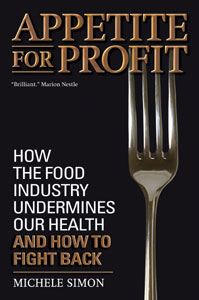
10. Appetite for Profit, By: Michele Simon
Is the food industry twisted? You bet it is! Find out more with this book. Check it out here...





So there you have it - my top 10 weight loss, weight management books. If you're even remotely interested in health, well-being, performance, or body composition, you owe it to yourself to check them out.
And, as always, I'd love to hear which books you think are top shelf as well. So share your book recommendations below.
Friday, August 29, 2008
5 Reasons Your Workout Ain't Working Out
Every week we get thousands of inquiries explaining why people made efforts to lose fat. Yet, they still haven't seen results. I compiled the five mistakes that are the most common mistakes people make when trying to lose fat. The simple solutions can make the difference between fatness and fitness.
1. I joined the gym. First of all, just paying for a membership doesn't lead to fat loss. You actually have to use the gym regularly and intensely to see results. Secondly, if the only thing you change is going to the gym three times a week, the road to weight loss is going to be a long slow haul.
For example, 45 minutes of strength training burns about 300 calories for a 180 pound person. Do that three times weekly and burn 900 calories. At that rate it would take you almost 4 weeks to burn one pound. Add three 30-minute walking sessions at 3.5 miles per hour and that same person would burn an additional 150 calories a session bringing about a one pound weight loss every two and a half weeks.
If you left the gym and grabbed a sports or meal replacement drink, you may offset any calories you burned leading to no changes on the scale. No matter how hard you train or the amount of hours you dedicate to your program, you will not reach the results you want if you aren't eating correctly.
The solution -- Exercise contributes to a caloric deficit, but needs to be combined with lowering calories. Create a customized meal plan at www.thomasstrong.com to compliment your exercise efforts and ultimately lose the fat.
2. I cut out one meal to reduce calories. Skipping meals starves you to fatness. Your body is designed to store food in case of times of starvation. In fact, the average person has enough stored fat to provide energy for basic body processes for around 60-70 days. Skipping meals causes your body to think it's being deprived from food, so it will begin to store more fat, rather than burn it off.
Solution -- Eat 5-6 nutritionally balanced, low fat, smaller serving meals throughout the day. This makes it easier for your body to burn off your food as fuel for energy. Eating smaller regular meals will fire up your metabolism so you can burn more stored fat.
3. I followed the exercise and meal plan that worked for my buddy. Getting an exercise program from a magazine, book or your buddy may not be provide the right program for you. Your program should be designed depending on your level of fitness, health status, goals and body type.
Having a customized exercise prescription and meal plan that matches your abilities and preferences can make all the difference in getting the results you desire and deserve. All Olympic athletes do not use the same exercise program and diets and neither should you.
Solution -- Hire a personal trainer and nutritionist OR fill out your preferences at www.thomasstrong.com for a personalized comprehensive fitness and meal plan. Let the results speak for themselves by taking a look at the transformation of our clients while on the exercise and meal plans.
4. I’ve been following my workout religiously for 12 weeks. If you are performing the same routine for more than six weeks, your body becomes less challenged and you reach a plateau. Without constant progression you will maintain your current physical status, which is better than losing ground, but it doesn’t move you close to fat loss goals.
Solution -- In order to continually progress, you need to overload your body with new stimulus. Vary your strength routine by trying new exercises, using advanced techniques, split body routines and incorporating machines, free weights and fit balls. For cardio, try interval training, circuit training or something all together new like kick boxing, mountain biking or stair climbing. I promise you that if you challenge yourself, you will feel a difference -- and SEE a difference.
Keeping a record of your workouts helps you see what you have done so that you can do a little more the next time. If you are a member of the Strong(er) exercise program, you won’t have to worry about reaching a plateau since new workouts are generated for you each week and when you check to retrieve your new workout, you have the option to increase your level. We’ve taken all of the guess work out for you.
5. I switched from fast foods to fruit and from soda to sports drinks. A calorie is a calorie is a calorie. If you eat 300 calories of carrots and 300 calories of chocolate, they have the same amount of energy to burn. Don’t get me wrong, it’s a lot easier for your body to digest and use the nutrients from carrots than chocolate and you are always better off making more wholesome and nutritious food choices, but you still need to create a negative caloric deficit to lose weight.
A handful of french fries and a banana may have the same amount of calories, so at the end of 24 hours you did not eat any less calories even though you are making better food choices, have more energy, have improved your digestion and stabilized your blood sugar. Some sports drinks may have as many calories and sugar as soda.
Solution -- Continue to replace processed foods with more natural ones, but also read your labels for calories. At the end of the day if your goal is fat loss, you should strive to create about a 500 calorie deficit to lose a pound a week. For example, if you weigh 200 pounds, your resting metabolic rate is approximately 2,000 calories a day to sustain normal activities of daily living. If you exercise, that number increases by the amount of calories you expend.
For example if you walked on the treadmill and expended 300 calories, your daily caloric expenditure would be 2,300. To lose one pound of fat a week, you should eat approximately 1,800 calories. Once again, if you are a member of the Strong(er) exercise and meal program, everything is spelled out for you step by step. No wondering and experimenting is necessary. Just print out your workouts and your meal plan and you are assured to lose 1–2 pounds of fat per week.
In general, to lose fat you should reduce the amount of fat you eat, eat several small meals of fresh foods daily, read your food labels, exercise most days of the week and challenge yourself physically. It’s also helpful to keep track of your workouts and what you eat by using a journal. To stop playing hit and miss with your fat loss, get a precise plan by going to www.thomasstrong.com
Thursday, August 28, 2008
Discrimination Against Fit People
Fitism: The Realities about Discrimination
Against Fit People
Sounds like a joke doesn't it. Discrimination against fit people? Fitism it is no joke; it is the latest form of discrimination that many people suffer from. You have either been a victim or an offender and possibly both. Let me give you an example.
You decide on your own free will to try and lose 10 pounds. You are no longer to eat whatever you want, skip meals, drink socially every weekend and no exercise. Your lifestyle choices are catching up with you.
You start cleaning up your eating, choosing more fruits and vegetables, avoiding unhealthy fats and processed foods and limiting alcohol to one drink a week. You have gotten together with friends over the long weekend. We'll call you Marg Simpson. "Hey Marg, what can I get you to drink? The usual?" You respond, "No thanks, I'm good with water right now. Maybe later." That's when it begins. This is not your usual behaviour so of course your friends ask "What's up with you?" Knowing these are your friends and they will be supportive, you explain to them that you are trying to lose some weight and get healthier. Now you are swarmed by your friends and lots of questions and comments but they are not supportive at all. All weekend you are pestered about your attempt at health and fitness and pressured to come back to the "eat, drink and be lazy" side.
One of two things are likely to happen: You will break down under the peer pressure, which is not unique just to teenagers and go back to your old ways. You will feel terrible about it and try the new regime on Monday when it's a "better time". Or, you will hold your ground and feel totally isolated and abandoned by your friends. This will likely start the slow breakaway from many within your current circle of friends and over time your new friends will have lifestyles and interests more similar to yours.
This example is with friends, which many of you may have experienced. But, it is even harder when the fitism is coming from your family – teasing you about your more muscular frame, giving you a guilt trip for not eating two helpings at Sunday dinner, ridiculing you passing on desserts or trying to talk you out of the new walking program. Sounds hard to believe. But, I have observed this form of discrimination through working with hundreds of clients.
If you are a victim of fitism keep in mind that misery loves company. It makes others feel better about their lack of healthy eating and activity if their friends and family are equally sedentary. Also, your friends or family may fear change – changes that you may undergo physically and personally and the change that may come when you inspire or encourage them to make positive changes themselves.
Don't let it throw you off course. Stick with it through the tough times and, in time, your friends and family will accept the new you. In fact, they will not only support you but they are likely to jump on board after seeing how much happier and healthier you are.
Against Fit People
Sounds like a joke doesn't it. Discrimination against fit people? Fitism it is no joke; it is the latest form of discrimination that many people suffer from. You have either been a victim or an offender and possibly both. Let me give you an example.
You decide on your own free will to try and lose 10 pounds. You are no longer to eat whatever you want, skip meals, drink socially every weekend and no exercise. Your lifestyle choices are catching up with you.
You start cleaning up your eating, choosing more fruits and vegetables, avoiding unhealthy fats and processed foods and limiting alcohol to one drink a week. You have gotten together with friends over the long weekend. We'll call you Marg Simpson. "Hey Marg, what can I get you to drink? The usual?" You respond, "No thanks, I'm good with water right now. Maybe later." That's when it begins. This is not your usual behaviour so of course your friends ask "What's up with you?" Knowing these are your friends and they will be supportive, you explain to them that you are trying to lose some weight and get healthier. Now you are swarmed by your friends and lots of questions and comments but they are not supportive at all. All weekend you are pestered about your attempt at health and fitness and pressured to come back to the "eat, drink and be lazy" side.
One of two things are likely to happen: You will break down under the peer pressure, which is not unique just to teenagers and go back to your old ways. You will feel terrible about it and try the new regime on Monday when it's a "better time". Or, you will hold your ground and feel totally isolated and abandoned by your friends. This will likely start the slow breakaway from many within your current circle of friends and over time your new friends will have lifestyles and interests more similar to yours.
This example is with friends, which many of you may have experienced. But, it is even harder when the fitism is coming from your family – teasing you about your more muscular frame, giving you a guilt trip for not eating two helpings at Sunday dinner, ridiculing you passing on desserts or trying to talk you out of the new walking program. Sounds hard to believe. But, I have observed this form of discrimination through working with hundreds of clients.
If you are a victim of fitism keep in mind that misery loves company. It makes others feel better about their lack of healthy eating and activity if their friends and family are equally sedentary. Also, your friends or family may fear change – changes that you may undergo physically and personally and the change that may come when you inspire or encourage them to make positive changes themselves.
Don't let it throw you off course. Stick with it through the tough times and, in time, your friends and family will accept the new you. In fact, they will not only support you but they are likely to jump on board after seeing how much happier and healthier you are.
Wednesday, August 27, 2008
Things I wonder
I Wonder...
This holiday season a buddy of mine and I decided to make the 1000 mile round-trip drive from my Toronto home to my parent's place in Philadelphia, Pennsylvania. We originally debated flying to PA, but we've always been fond of road trips. With enough Spike, we usually arrive at our destination having performed several concert's worth of iPod karaoke, written several philosophy dissertations, and solved many of the world's most pressing and difficult problems.
Sure, that one time we combined one too many Spike tablets with one too few rest breaks and ended up performing Tom Green's "Tiny Salmon" for 3 hours straight, but that was an anomaly and with the proper Spike-to-rest ratio, this sort of thing can be avoided and more productive endeavors made possible.
For example, during this most recent road trip, we got on an "I wonder" kick, throwing out all sorts of ideas about health, fitness, nutrition, and success in general. And since many of my best articles have been nothing more than glorified transcripts from casual conversations, I figured I'd share some of our top musings from the trip. Here they are:
I wonder...
Is it holiday overeating that makes 65% of the adult population overweight/obese?
Despite the fact people think of Thanksgiving and Christmas dinners as their biggest food-fests, I wonder if it's really the entire holiday season that does the damage. Think about it, starting around Thanksgiving, folks begin to overeat and this pretty much continues through New Years Day.
Doesn't it go pretty much like this? You've got Thanksgiving dinner in late November. Then it's the leftovers, the stuffing, the mashed potatoes, the candied yams, the pies, and the cranberry sauce till early December. And before folks get back into their normal nutritional groove, here come the Christmas chocolates, cookies, and treats. Then come the Christmas parties. The treats and the parties ramp up till Christmas Eve and then comes a big Christmas Eve dinner.

Of course, the next day is Christmas and it's cookies and snacks all day leading up to a big Christmas dinner. Two big dinners in a row means lots of leftovers, leftovers that'll last till January. Even after Christmas day, the dietary debauchery can continue. No one eats light on New Year's Eve or New Year's Day.
So before you know it, you've been overeating for 5-6 weeks. That's a heck of a lot of overeating isn't it? Yet not only are you overeating calories, you're displacing good foods with nutritionally marginal or questionable ones, the worst form of dietary displacement. With all this overeating and no exercise (everyone is just too busy to exercise during the holidays, aren't they?), it's surprising that most folks only put on a 3-5 pounds of fat during this time. One might expect the average person to pack on more!
So let's say your holiday season packs a mere 3 pounds of fat on you. Three pounds is nothing much to worry about, is it? Well, not if you work those 3 pounds off during the rest of the year. But most people don't. They retain those 3 pounds. Compounded over 10 years, you've got 30 extra pounds of body fat. Continue this pattern from ages 25 to 45 and you're looking at 60 pounds of unwanted baggage.
Must be age-related metabolic decline, right? Or maybe it's just 20 years of seasonal overeating followed by 11 months of inactivity or, at least, inadequate activity. Maybe not. But I wonder...
As for me, I'll keep my holiday treats in moderation, keep my exercise volume high, and avoid the holiday weight gain.
I wonder...
Would success come more easily if people looked for success patterns vs. viewing success as a mystery?
Whether it's relationship success, business success, or fitness success, once in a while, success just seems to "happen" and no one, not even the experts, know how or why. However, this "lucky guy" success story just described is actually quite rare. Far more often success is no more a mystery than is a soluble mathematical equation. Sure, just like math equations, the success equation may be hard to solve at first. But if you study success hard enough and enlist the right guides (coaches, mentors, etc.), I have no doubt you can decipher the code.
In a recent interview with rapper, actor, and producer Will Smith, Will talks about his commitment to seeing patterns in life, a trait passed down from his military-trained father. In this interview he discusses the genesis for the movie Independence Day.
"My business partner and I came to Hollywood to be stars. We wanted to make a blockbuster movie. So we looked for patterns. We observed that of the top ten movies of all time, ten were special effects or animation. And nine were special effects or animation with creatures. And eight were special effects or animation with creatures and a love story. So we came up with the idea to do Independence Day."Will Smith got it. He looked for the patterns in the movie industry that lead to blockbuster hits. Duplicating them, he in turn created a blockbuster hit himself. This can happen in every industry and in every endeavor. By studying success stories, modeling quality, and plugging in important variables, success can easily be demystified. And with the right amount of work and luck, success can be duplicated.

I often offer similar advice with respect to supplements. From time to time I encounter supplement skeptics, folks who heavily distrust the supplement industry and believe that no supplements are necessary. Once they form this opinion they begin their anti-supplement crusade.
My advice –look for patterns. There are thousands of unbiased real-world examples of supplements making a difference. And even more, if you asked every single person that had a noteworthy physique if they took supplements, you'd find that a huge majority of them (90% or more) do.
It may be a protein supplement, it may be a greens supplement, it may be a multi-vitamin, it may be a fish oil supplement, it may be a creatine supplement, it may be a workout recovery drink, or it may be all of the above. Yet let's not get bogged down with the specific types just yet. The bottom line is this, there's a close correlation between having a great, note-worthy body and having used supplements. Is it directly causal? Not necessarily. But there's an important pattern there and only a fool would ignore it.
Most people believe that success is a mystery and only the "lucky" or "gifted" achieve it. And it's precisely this attitude that ensures that they themselves will remain "unlucky." The success formula is right in front of our eyes and the patterns are there, we just have to look for them. Of course, maybe you'll find them and success will still remain elusive. But I wonder...
As for me, I'm going to keep searching for success patterns and trying to duplicate them.
I wonder...
Would more people overcome "average genetics" if they devoted 1-2 hours to their exercise plan every single day?
A new Canadian television program, The Dragon's Lair, features aspiring entrepreneurs who are given the opportunity to pitch a business idea to 5 successful venture capitalists in the hopes of convincing them to invest in their business ideas. In typical reality TV fashion, the show presents a string of woefully unprepared contestants making a mockery of entrepreneurship.
However, on a recent episode, a woman from London Ontario, home of my Alma Mater, the University of Western Ontario, impressed the "dragons" with her business model and approach. She had started a line of delicious, omega-3 rich, organic salad dressings, She already had distribution and was looking for capital to mass-produce and distribute her dressings. Her presentation was on point, her marketing and advertising was solid, her product was of high quality, etc. And as a result, two of the dragons kicked in a total of over 100K to help her along.
When interviewed, post-show, she confessed that she was a mother of 2, worked full-time during the day, and devoted only 1-2 hours/night during the week to her salad dressing business. "People are always shocked when they hear about how I've grown the business" she stated in the interview. "But you'd be amazed by how much you can accomplish with 1-2 hours of directed effort performed consistently 4-5 nights a week, every week."
This is a great testimony to the power of directed effort. You don't always need a ton of time to get in shape, to grow your business, to pursue a new hobby. This woman spent merely 5-10 hours per week, or 250-520 hours per year (the equivalent of 5-10 50 hour work weeks) on her business. But what you do need is quality, purposeful effort, consistently performed.
The American Time Use Survey recently reported that the average American adult watches 19.8 hours of TV per week (n=50,000). That's nearly 3 hours per day. And I often hear adults complain that they don't have time to exercise, to start new hobbies, or to even read a book. So I'm blown away when I consider what people could accomplish if they were to replace some of that TV time with purposeful, consistent effort. Maybe there's more to big accomplishment than this...But I wonder.
As for me, I'll keep plugging away with purpose and consistency.
I wonder...
How much more dedicated would people be if they entered into challenges listing their advantages instead of their disadvantages?
A good portion of my time is spent consulting with exercisers and athletes wanting to improve their health and body composition. I also spend a lot of time with fitness professionals wanting to improve their professional offerings and make more money. As a result of this experience, I've seen all sorts of different approaches to change. Interestingly, it's much more common for people to enter into change by listing all their disadvantages instead of listing all the things they've got going for them.
Just last week, a well-known strength coach/personal trainer hired me to help him make over his physique, sort of like The Dave Tate Project. Over the years this guy has devoted so much to his clients that he's neglected himself, allowing his body fat to exceed 20%. Finally, sick of his unimpressive body, he reached out for help.

I was impressed as one of the hardest things to do as a professional is admit that you need professional help yourself. Yet I quickly realized that this guy needed an attitude adjustment. He began by stating the following:
"This is long overdue. I seem to be the least genetically gifted guy on the block and seeing as I haven't been "shredded" in about, oh, 20 years, you've got your work cut out for you."Now how's that for an attitude designed for defeat?
"Further, I've got everything from lots of nagging injuries to big-time muscle imbalances. I'm over 40, have fears of losing muscle size, have to wake at 4am every day, work in a high stress job, and have a family to take care of. And although I'm finally weaning off anxiety meds, that's another challenge."
"Hey John, I want to get in shape but here's my laundry list of difficulties and insurmountable hurdles."Knowing that with this attitude of defeat, we'd never get anywhere, I flipped things around on him. Here's what I wrote:
"No worries, I'll be easy on ya. Well, as long as you're compliant and focus on your advantages rather than your challenges.
"Dude, you've got lots of experience, more knowledge than 99.9% of the trainers in the world, a wife who knows what it's like getting in shape and has even been on stage herself, lots of muscle memory, access to a gym 24-7, access to the Precision Nutrition team, a flexible schedule that's far from 9-5, a son who will look up to your progress and see a great example set for his own future, a group of trainers around you every day at work supporting you, and so on.It's amazing to me that this coach, a guy who's trained under the top coaches in the world, has achieved physique success in the past, has coached countless bodybuilding and fitness competitors to success, has published articles and books on body transformation, and works in the field day-in and day-out, believed that he has more working against him than for him. And if he believes this, how much worse must it be for the average trainee, one who's never been in shape in his or her life?
When you look at it that way, you've got it a lot easier than most, don't ya?"
No wonder people fail to stick to their plans. No wonder people give up short of reaching their goals. They're counting disadvantages and ignoring advantages, or even failing to recognize the advantage they possess. I now advise each of my clients to start by listing each and every one of the things they've got going for them. And if they miss a few, I add to the list. Maybe this new exercise will help establish the right mindset for results. Maybe not. But I wonder...
As for me, I'm going to continue emphasizing my advantages when starting new projects. Oh, I like to remain aware of what I'm up against. But I'm unwilling to give it equal or greater power than what I've got going for me.
------------------------------------------------------------------
I wonder other stuff too...stuff like:
Why people will waste a hundred hours per year scouring the web for free information when they could have popped on Amazon, bought a definitive book, read that book, and used the remaining 95 hours to apply what they learned?
How much further ahead would people be if they replaced 2 hours/wk of watching football with 2 hours/wk of goal setting, program organization, and record keeping?
How much would the North American IQ increase if people read 1 book a month, every month?
Would people learn new things more completely if they stopped "I knowing" everything?
Subscribe to:
Comments (Atom)


 Posts
Posts

